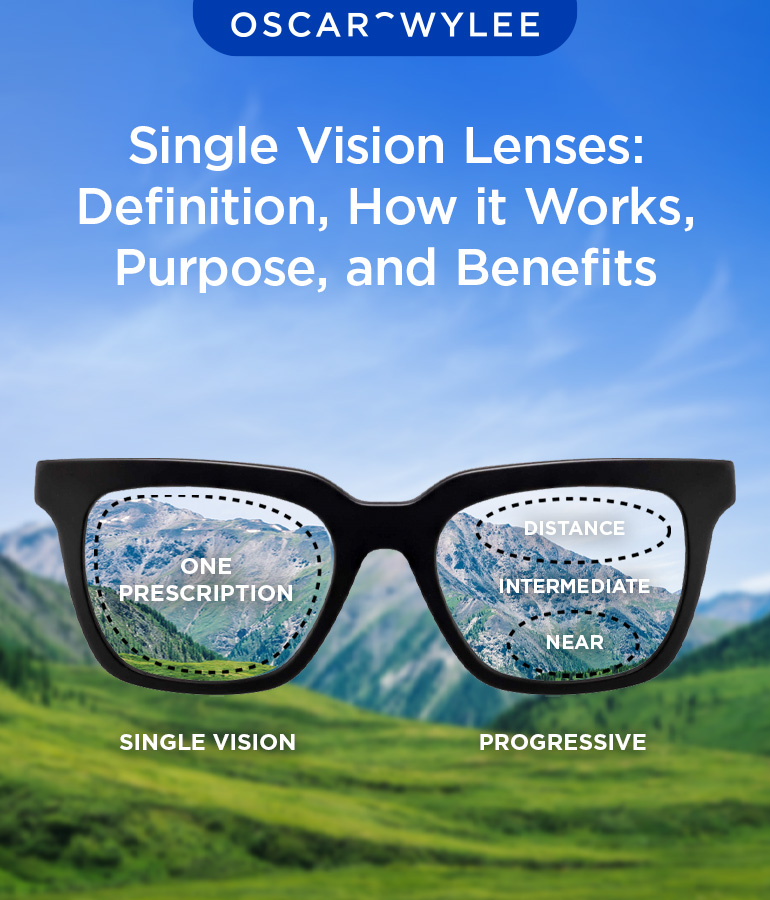
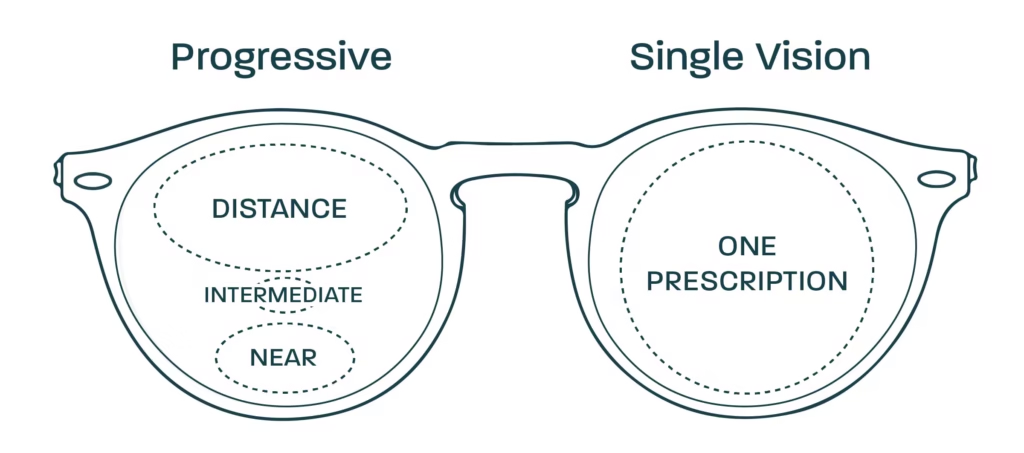
- Distance vision or reading only
- One power across the entire lens
- Used for distance glasses or reading glasses
Single vision lenses are the most common type of lenses used in eyeglasses.
Features
- One power throughout the entire lens
- Used for either distance vision or reading
- Simple and affordable
Best For
- People with myopia (short-sightedness)
- People with hyperopia (long-sightedness)
- Reading glasses
Blue Cut (Blue Light Protection) Lenses
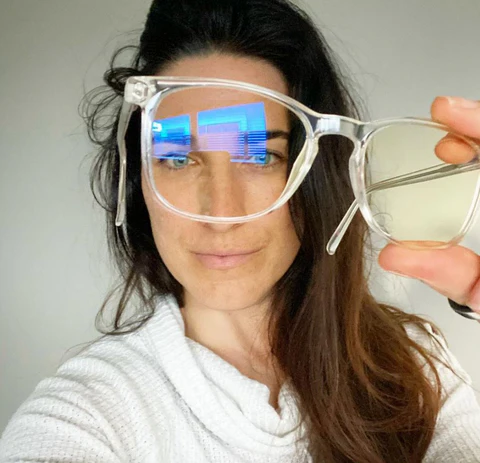
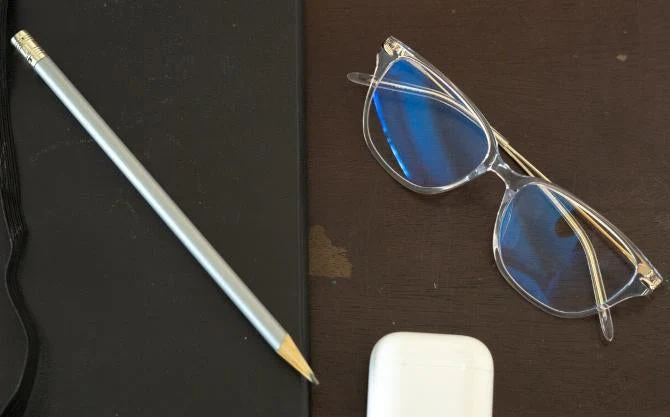
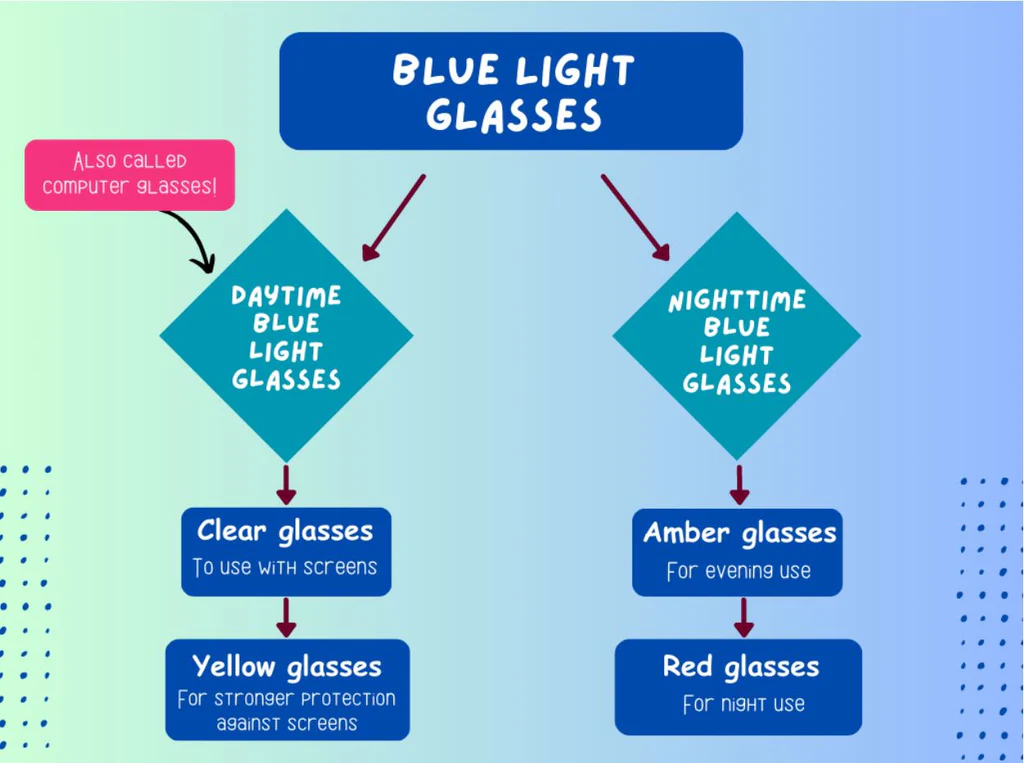
lue cut lenses filter harmful blue light emitted from digital screens.
Features
- Reduces eye strain from screens
- Improves visual comfort
- Helps reduce headaches caused by digital devices
Best For
- People who use computers, smartphones, and tablets for long hours
Lens Coatings and Technologies
Modern lenses also come with advanced coatings for better performance.
Anti-Reflective (AR) Coating
- Reduces glare and reflections
- Improves night driving visibility
Scratch Resistant Coating
- Protects lenses from everyday scratches
UV Protection
- Blocks harmful ultraviolet rays from sunlight
High Index Lenses
- Thinner and lighter lenses for higher power prescriptions
How to Choose the Right Lens
Choosing the right lens depends on:
- Your age
- Your daily activities
- Your prescription power
- Your screen usage
For example:
- Students & office workers: Blue cut lenses
- People above 40: Progressive lenses
- High prescription: High index lenses
- Outdoor lifestyle: Photochromic lenses
An eye care professional can help you select the best lens for your lifestyle and vision needs.
Lens Comparison
| Lens Type | Best For | Price Range | Advantage |
|---|---|---|---|
| Single Vision | Distance / Reading | ₹800–₹2000 | Simple |
| Bifocal | Near + Distance | ₹1500–₹3500 | Two powers |
| Progressive | All distance | ₹3500–₹15000 | No line |
| Blue Cut | Computer users | ₹2000–₹8000 | Eye protection |
Leave a Reply